
Late updated: 01 Jan 2026 08:01
Written by: Emily Thornton
Exploring The History Of Native UK Garden Design: A Cultural Journey
The journey of native UK garden design is a captivating exploration into the past, revealing landscapes rich with historical and cultural significance. Before transforming into the ornamental and exotic wonders we see today, these gardens were firmly rooted in the natural environment of their origin. Understanding native UK garden design involves appreciating how each period in history has influenced its development, reflecting the changing attitudes and artistic influences of the times.
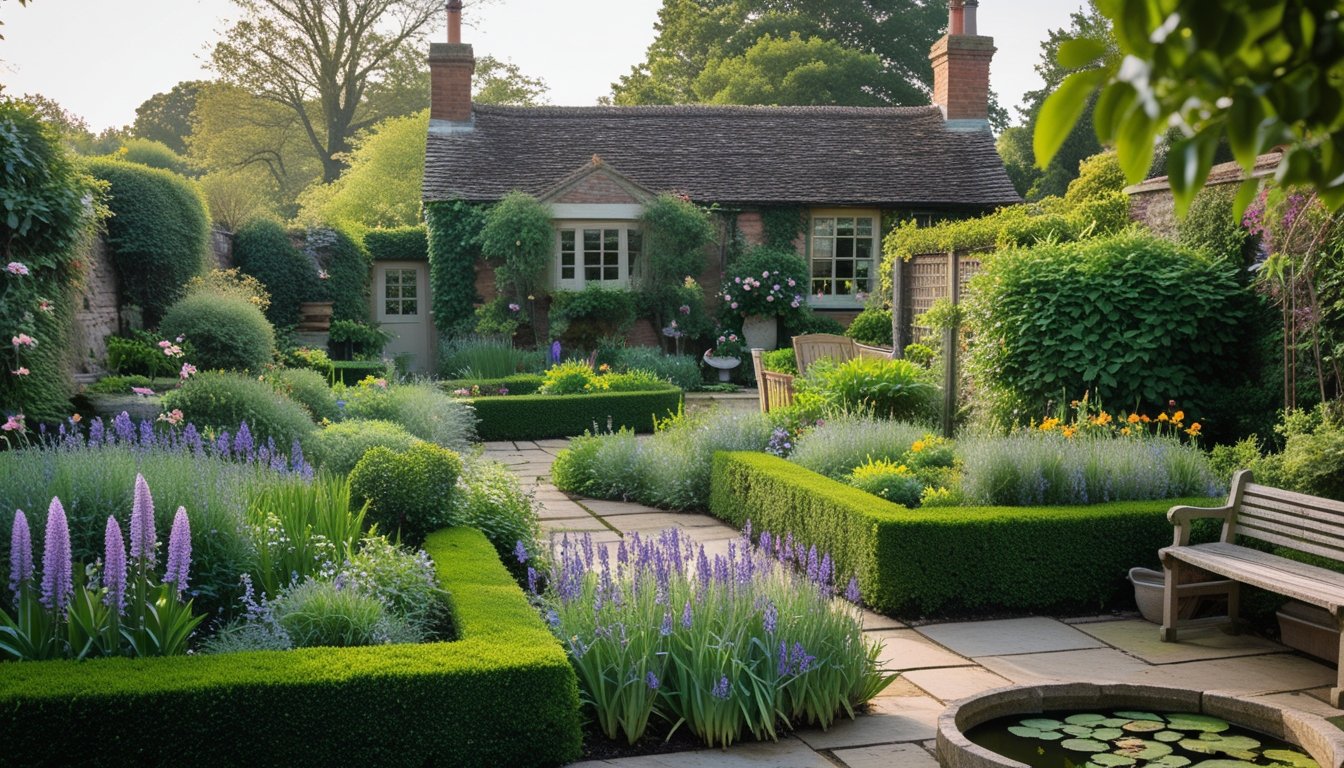
Our article navigates through time, showcasing how garden design evolved from the self-sufficient plots of the medieval period to the refined, ornate gardens of the Victorian era. Each style not only exhibited the aesthetic preferences of the era but also echoed broader cultural and societal shifts. These gardens tell stories of past values and innovations, offering a living testament to the enduring connection between people and nature in the UK.
Key Takeaways
- Native UK garden design reflects historical and cultural changes.
- Garden styles evolved from functional to ornate over time.
- Each period highlights distinct features and influences.
Key Periods and Figures in Native UK Garden Design
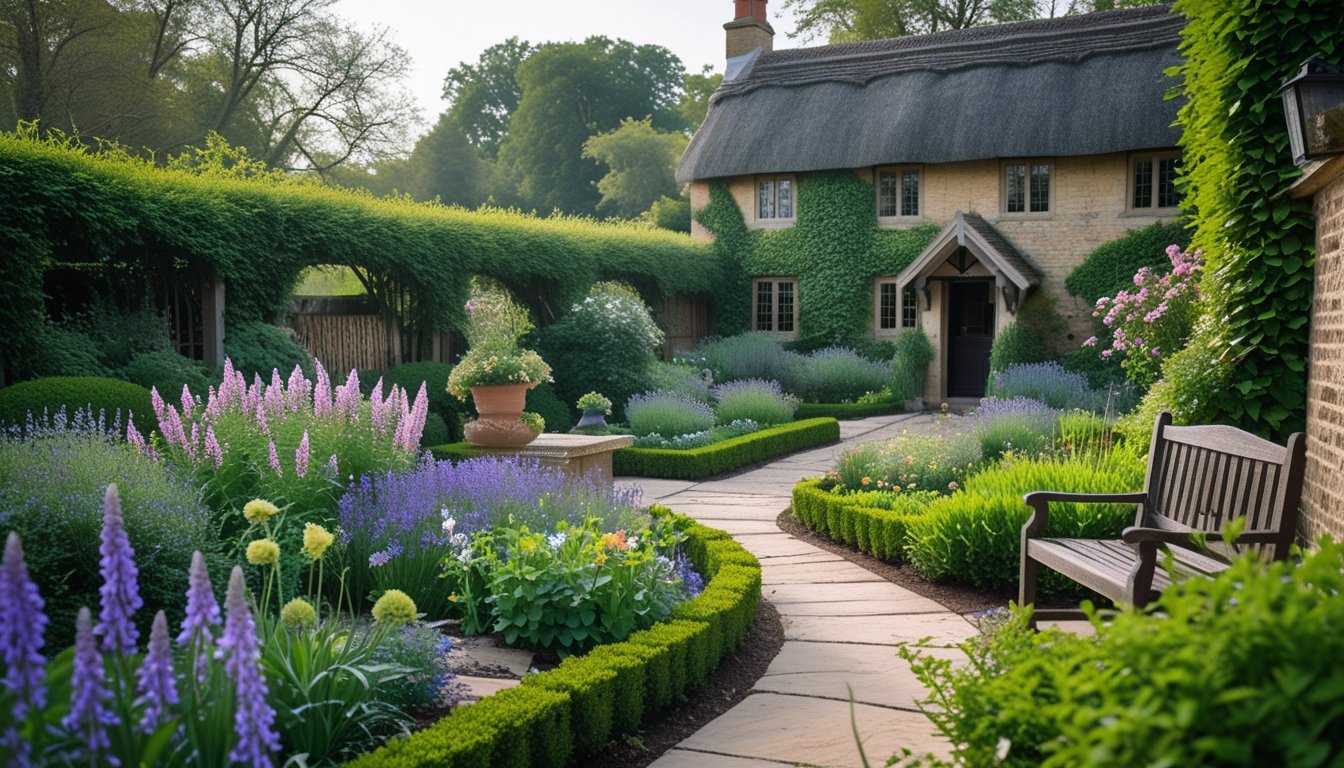
The evolution of native UK garden design reflects a rich tapestry of history, where different periods introduced distinct styles and influential figures. This exploration captures the development from medieval functional spaces to modern naturalistic gardens, highlighting key innovations and notable garden creators.
Early Influences: Monastic, Medieval, and Tudor Gardens
In the medieval era, monastic gardens were vital for their utility, primarily serving as a source of food and medicinal herbs. These gardens featured herbaceous borders and raised beds, reflecting a practical yet aesthetic appeal. Medieval gardens focused on both functionality and beauty, integrating flower and herb gardens.
As we transitioned into Tudor times, gardens became symbols of power and status. Notable elements included intricate Tudor knot gardens and the use of parterres. Hampton Court exemplified this shift, showcasing the grandeur of Tudor landscaping. These gardens employed geometric designs with topiary and rigid forms, creating visually impressive estates.
The Rise of Formal and Aristocratic Gardens
With the advent of the Renaissance, formal gardens gained prominence among the aristocracy. Emphasising symmetry and order, these gardens featured manicured landscapes with meticulous avenues and fountains. Formal parterres, often used for displaying wealth and status, became prevalent. Moreover, the controlled beauty of topiary and hedging defined these grand gardens.
This period saw the origins of formal gardens become a symbol of cultivated elegance—exemplified by the elaborate layouts of formal lawns and decorative fountains, which captured the opulence of the time. These gardens served as extensions of the estates they adorned, whispering prestige to all who wandered through them.
The English Landscape Garden Movement
The English landscape garden emerged in the 18th century, revolutionising garden design by embracing nature's innate beauty. Capability Brown, a defining figure, epitomised the movement with designs featuring sweeping lawns and serpentine lakes. This style, manifested in renowned gardens like Stourhead, rejected geometric rigidity in favour of organic forms.
The Georgian gardens of this era exemplified pastoral elegance, prioritising unobstructed views and naturalistic aesthetics. The appeal lay in recreating an idealised nature where carefully placed clumps of trees and water features created visual harmony. This movement marked a departure from the heavily structured gardens of the previous periods.
The Victorian Era and Plant Collecting
The Victorian era heralded an explosion of botanical diversity in UK gardens. Enthusiastic plant collectors introduced an array of exotic species. Victorian gardens became a canvas of experimentation, incorporating innovative features such as glasshouses, rockeries, and kitchen gardens. Rockeries and rambling roses added layers of charm to these gardens.
The fascination with botany led to the development of grandiose plant collections. The Victorian plant collectors' zeal redefined garden boundaries, transforming them into showcases of global flora. This era's hallmark was its eclectic synthesis of global influences, paired with an unquenchable thirst for horticultural knowledge.
The Arts and Crafts Influence and Modern Naturalism
The late 19th and early 20th centuries saw the Arts and Crafts movement flourish, advocating for a return to traditional craftsmanship and natural forms. Influential figures like William Morris, Gertrude Jekyll, and Sir Edwin Lutyens championed this aesthetic. Emphasising harmony with nature, gardens such as Hidcote and Sissinghurst embodied these principles.
We recognise Gravetye Manor and Munstead Wood for embracing naturalistic planting and wildflower meadows, in contrast to prior formality. This shift led to a focus on textural variety and seasonal diversity. The movement advocated for personalised spaces, integrating practical and sentimental elements, while also enriching our cultural landscape with enduring elegance.
Distinctive Features and Evolving Principles of Native UK Garden Design
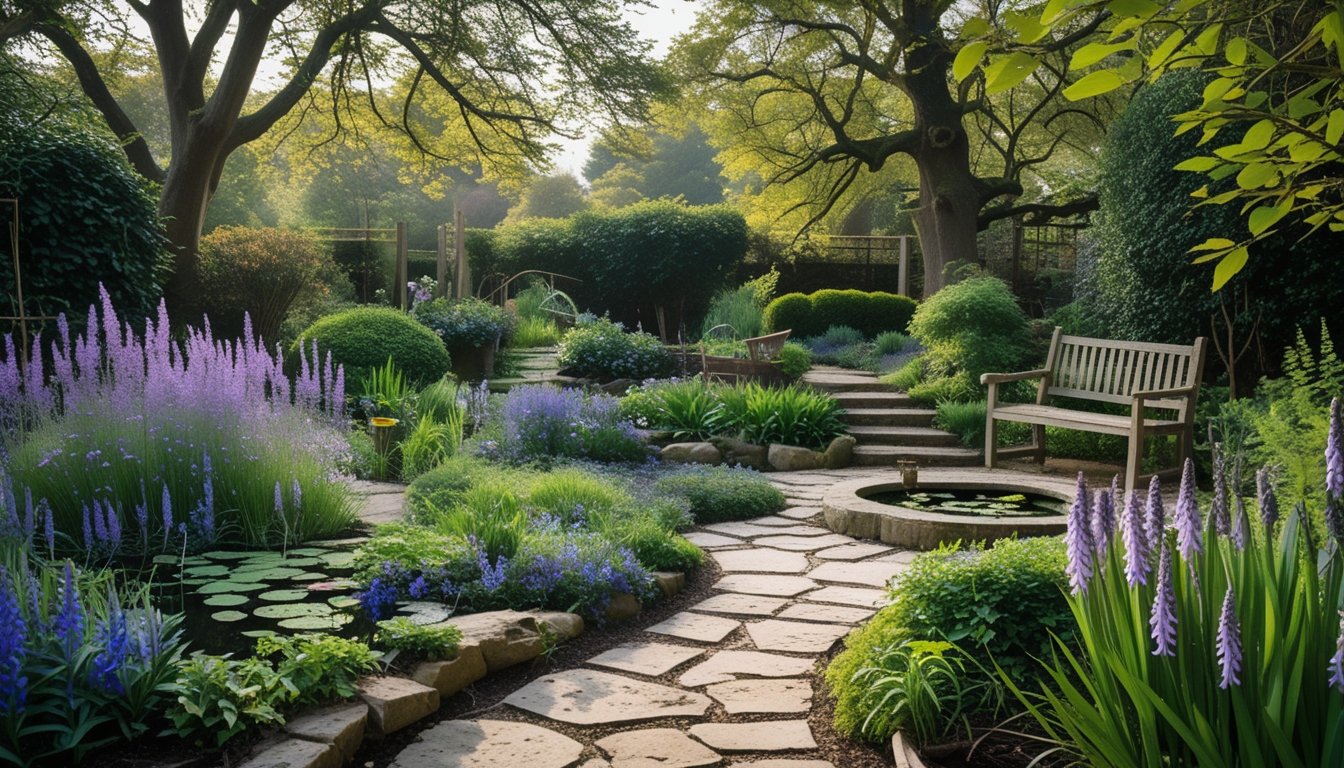
Native UK garden design reflects a deep interconnection between local ecosystems and human creativity. We explore the integration of indigenous plants and animals, the use of native materials, and the shifting perspectives towards nature, echoing the historical influence of iconic gardens like Westbury Court and Kenilworth.
Integration of Native Flora and Fauna
Our gardens serve as vibrant ecosystems where native flora and fauna thrive harmoniously. English cottage gardens, with their herbaceous borders and colourful wildflower meadows, exemplify this integration. These gardens often feature species like primroses, foxgloves, and bluebells, which attract local wildlife, including bees and butterflies. By prioritising the preservation of native plant species, we support biodiversity and resilience against invasive species.
Native faunal elements are also essential, with habitats designed into garden layouts. Birdhouses, hedgehog shelters, and ponds encourage local wildlife to make these gardens their home. Embracing the cycles of nature, such as allowing certain areas to grow wild, fosters a habitat where both plants and animals can flourish.
Design Elements: Materials, Layouts, and Ornamentation
Design elements in UK gardens are thoughtfully chosen to reflect native heritage. Materials like local stone and wood are commonly used for pathways, walls, and furnishings, blending seamlessly with the natural surroundings. We see this in historic gardens where the choice of material enhances the authenticity and continuity of the landscape.
Layouts often include features like sinuous paths and secluded nooks, inspired by the flowing lines of English landscape gardens. Structures such as pergolas and gazebos, often adorned with climbing roses or wisterias, add an element of charm. Ornamental features like sundials not only serve practical purposes but also connect us to the history and evolution of garden design.
Shifting Attitudes Towards Nature and Sustainability
Our understanding of native UK garden design has evolved to increasingly prioritise sustainability. Techniques such as rainwater harvesting and composting are becoming more prevalent. These methods reduce environmental impact and resource use, aligning with modern ecological principles.
Attitudes towards nature have shifted from control towards coexistence. Today, maintaining a balance between manicured lawns and wildflower sections encourages us to appreciate nature’s spontaneity. This approach is rooted in a desire for sustainability that resonates with the broader cultural movement towards environmental stewardship. Through such practices, we aim to create gardens that are not only beautiful but also ecologically responsible.
Frequently Asked Questions
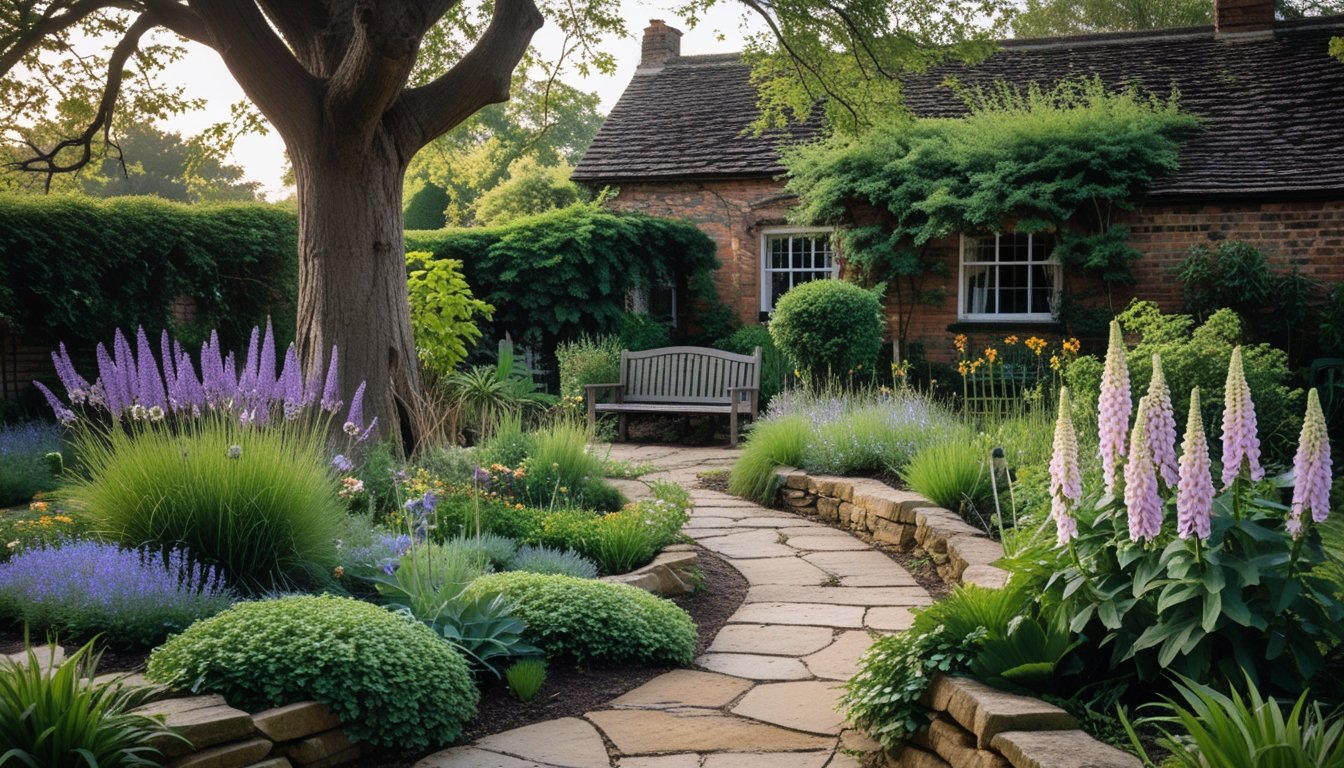
Traditional British garden design is rich in history, reflecting a blend of styles and influences over centuries. Significant developments can be traced from medieval times through the Arts and Crafts movement, to contemporary trends emphasising sustainability and conservation.
What are the characteristic features of traditional British garden design?
Traditional British gardens often exhibit symmetrical layouts, formal pathways, and iconic elements. These may include water features, topiary, and native plants. Such designs strive for harmony and balance, echoing the classical influences of European garden styles. Historical properties often display these features, showcasing a timeless aesthetic.
How has the design of English gardens evolved from the medieval period to the present day?
From self-sufficient medieval gardens to ornamental 20th-century designs, English garden design has undergone considerable transformation. Initially focused on practicality, gardens gradually embraced decorative and recreational purposes. This evolution reflects shifts in culture, technology, and societal values over time.
In what ways have the Arts and Crafts movement impacted the development of gardens in the UK?
The Arts and Crafts movement encouraged a return to traditional craftsmanship and inspired a love for native materials and plants. Garden designs from this era often feature rustic structures, informal layouts, and an emphasis on natural beauty. It marked a departure from the more ornate Victorian styles, highlighting simplicity and authenticity.
Can you identify key influences from abroad that have shaped the style of British gardens?
Several influences from abroad have left their mark on British gardens. The introduction of exotic plant species during the colonial period broadened botanical diversity. Italian Renaissance gardens brought symmetry and order. Meanwhile, the French parterre influenced formal garden layouts. These global influences have enriched the British gardening tradition.
What role have historical figures such as Capability Brown played in shaping the landscape of UK gardens?
Capability Brown, one of the most notable figures, revolutionised the 18th-century British landscape. He championed the English landscape garden style, emphasising naturalistic beauty over formal constraints. Brown's designs often featured rolling lawns, serpentine lakes, and carefully placed trees, significantly shaping landmarks and estates throughout the UK.
How have contemporary concerns like sustainability and wildlife conservation influenced modern UK garden design?
Modern UK garden design increasingly integrates sustainability and wildlife conservation. Landscapes now often include native plantings that support local ecosystems. Sustainable practices, such as rainwater harvesting and organic gardening, are gaining popularity. These trends not only preserve biodiversity but also address environmental challenges facing our communities today.