
Late updated: 17 Dec 2025 14:12
Written by: Emily Thornton
Best Native UK Bushes For Privacy: Top Picks For Your Garden
Exploring the best native UK bushes for privacy can transform your outdoor space into a serene and secluded sanctuary. These natural barriers not only provide effective screening but also contribute to the local ecosystem. Our focus is on selecting bushes that thrive in the British climate while promoting biodiversity in your garden. By incorporating species that are well-suited to their environment, we ensure your garden will flourish with minimal upkeep.
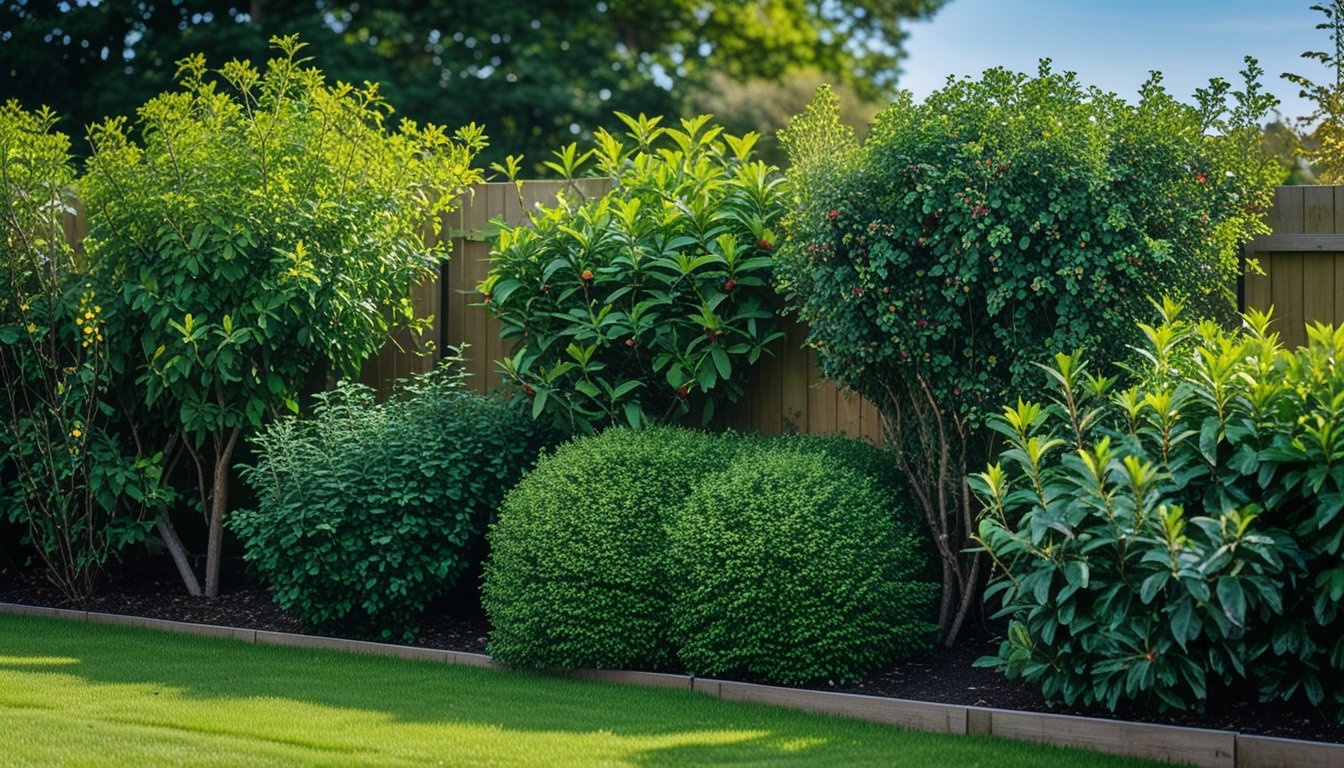
In our guide, we delve into the top choices for privacy hedges, considering factors such as growth rate, foliage density, and wildlife support. We aim to equip you with the necessary insights to make informed decisions, creating a garden space that is both private and eco-friendly. Native shrubs like hawthorn and holly are excellent examples of fast-growing options that offer dense coverage and thrive in urban settings.
Join us as we uncover the unique benefits of native UK bushes, ensuring your garden remains a lush, inviting, and private retreat. We explore varied options, considering not only the immediate visual appeal but also the long-term ecological impact of your choice.
Key Takeaways
- Native UK bushes provide effective privacy and support biodiversity.
- Choosing the right bushes ensures minimal maintenance and ecological benefits.
- Explore the best options to enhance garden privacy sustainably.
Top Native UK Bushes for Privacy

Native bushes are perfect for those looking to balance privacy with support for local ecosystems. These plants adapt well to British climates and provide effective garden screening. From deciduous options like hawthorn and beech to evergreens like holly, there's something here for everyone.
Hawthorn as a Privacy Hedge
Hawthorn (Crataegus monogyna) is well-suited for creating a formidable hedge. Known for its dense foliage, this bush forms a solid barrier, not easily penetrated. Its thorny nature enhances security, making it a popular choice for garden boundaries.
Beyond privacy, hawthorn contributes to biodiversity. In spring, its blossoms attract pollinators, while autumn brings berries that feed birds. Because it thrives in a variety of soil types and withstands strong winds, hawthorn is resilient and low-maintenance. While it’s primarily deciduous, its closely-knit branches remain a reliable privacy screen even in winter without leaves. Those looking for a dependable and attractive hedge will find hawthorn a versatile choice.
Blackthorn for Effective Screening
Blackthorn (Prunus spinosa) is another excellent option for privacy hedges. It features dense, thorny branches that create an impenetrable barrier, ideal for security and seclusion. Known for its ability to thicken quickly, blackthorn makes an effective screen in a short span of time.
This native species also supports local wildlife, with white blooms appearing in early spring, followed by deep blue sloes come autumn. Blackthorn prefers full sun but tolerates partial shade, adapting easily to various soil conditions. It's a strategic choice for those seeking both aesthetic appeal and functionality, as it remains robust and resilient throughout seasonal changes.
Beech and Hornbeam Hedges
Beech (Fagus sylvatica) and Hornbeam (Carpinus betulus) are both favoured for their versatility in hedging. Beech hedges hold onto their russet leaves through winter if trimmed regularly, providing privacy year-round. Their coppery autumn hues add a touch of seasonal beauty.
Hornbeam hedges, in contrast, have distinctive ridged leaves and lend an informal charm to garden spaces. Resistant to windy conditions and tolerating more clay soils, hornbeam’s adaptability makes it a suitable choice for many types of gardens. These hedges serve as a fantastic deciduous option, offering privacy without compromising on elegance or ecological benefits.
Holly and Yew for Evergreen Cover
Holly (Ilex aquifolium) and Yew (Taxus baccata) are perfect for those seeking evergreens. Holly has striking glossy leaves and red berries, making it attractive throughout winter. Its spiky leaves also contribute to security, suitable for protective hedges.
Yew, known as an English Yew or Common Yew, is revered for its dense, green foliage. This hedge plant is long-lived, creating a timeless look in gardens. Yew thrives in diverse conditions, from full sun to deep shade, and it's more forgiving regarding soil pH levels than many other hedging options. Both holly and yew provide robust, year-round privacy while simultaneously enriching local habitat diversity.
Supporting Biodiversity and Selection Considerations
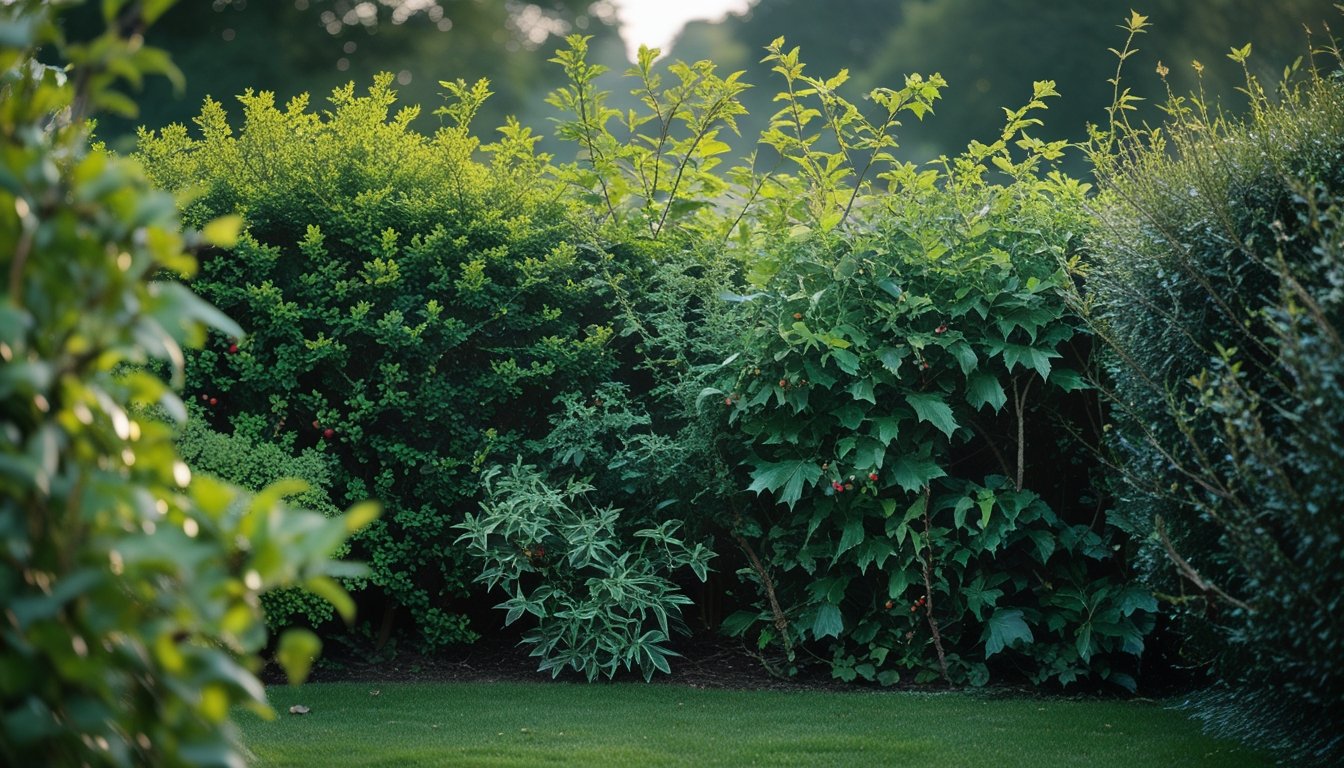
Selecting native UK shrubs for privacy not only enhances your garden's aesthetic but also supports urban biodiversity. These plants attract pollinators, like bees and butterflies, and provide habitats for a variety of urban wildlife. Careful consideration ensures optimal benefits and reduced maintenance.
Benefits for Urban Wildlife
Native shrubs play a pivotal role in urban ecosystems by offering shelter and food sources. Species like Sambucus nigra (elder) and Corylus avellana (hazel) support pollinators such as bees and butterflies. Rosa canina (dog rose) produces hips high in vitamin C, providing nutrition for birds. Diverse plantings attract varied wildlife, from insects to small mammals. Shrubs like Viburnum opulus (guelder rose) and Sorbus aucuparia (rowan) also foster a dynamic ecological balance, crucial for urban biodiversity.
Choosing the Right Shrubs for Your Garden
When selecting shrubs, consider factors like soil type, sunlight, and space. Alnus glutinosa (alder) thrives in moist conditions, while Cornus sanguinea (dogwood) prefers well-drained soils. For shaded areas, Prunus laurocerasus (cherry laurel) can be a robust choice. It's essential to match shrubs to the local climate and specific garden conditions to minimise maintenance. Native options, like Acer campestre (field maple), require less external input, making them excellent candidates for sustainable gardening.
Planting Tips and Maintenance Advice
Planting a hedge effectively requires planning. Start by preparing the soil with compost and consider mulching to retain moisture. Space plants evenly to ensure healthy growth, typically 30-60 cm apart depending on species. Regular maintenance involves pruning and checking for pests. For a privacy hedge, species like Ligustrum vulgare (privet) and Griselinia littoralis work well with strategic shaping. Hippophae rhamnoides (sea buckthorn) provides robust growth and requires minimal pruning. Monitoring plants ensures thriving health and optimal privacy barriers.
Frequently Asked Questions
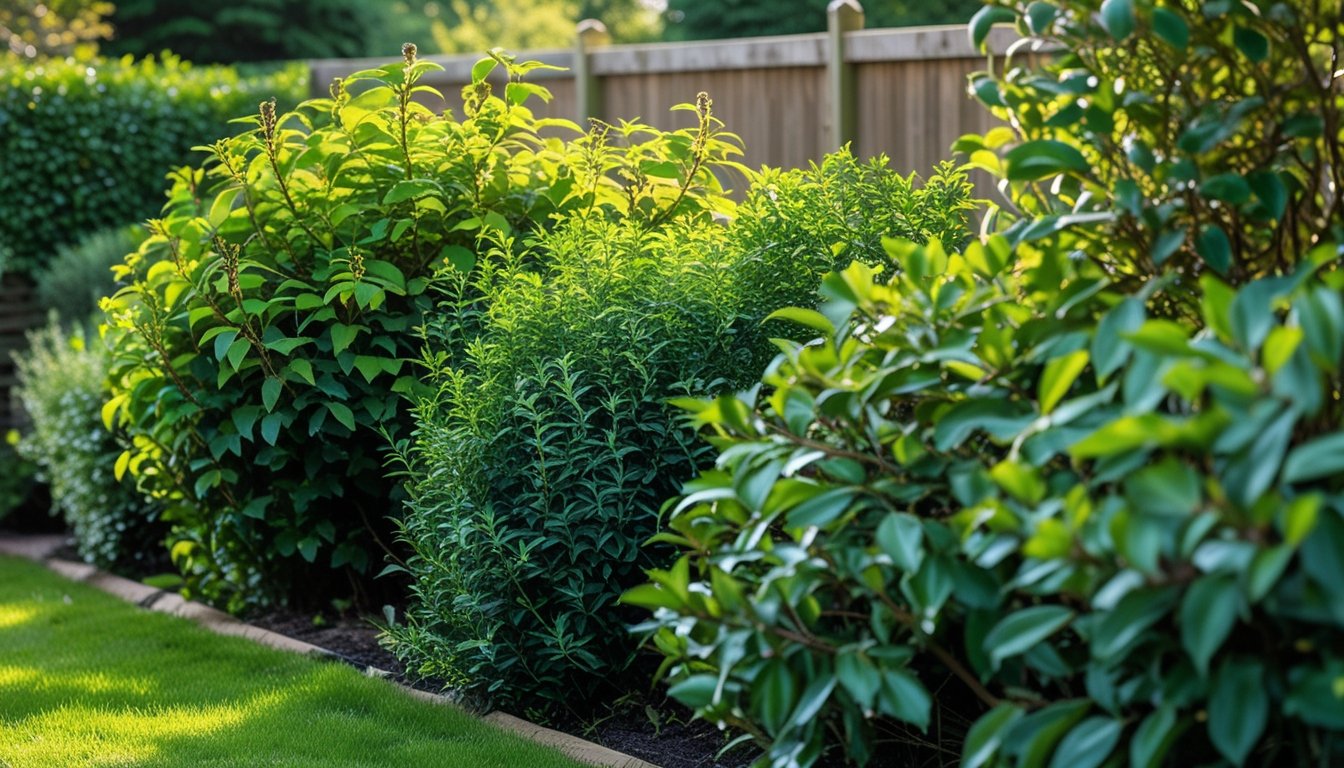
In creating effective privacy screens with native UK bushes, it's essential to consider growth rate, density, and maintenance requirements. We cover some of the common inquiries regarding selecting and maintaining these plants.
What are the top choices for fast-growing bushes for privacy in the UK?
Hawthorn and Blackthorn are among the fast-growing native bushes ideal for privacy. They not only grow quickly but also form dense hedges, making them perfect for urban gardens where space might be limited.
Which native UK shrubs are best for creating a dense garden screen?
Dogwood and Field Maple are excellent choices for a dense garden screen. They provide substantial foliage that effectively blocks visibility, contributing greatly to privacy.
Are there any evergreen native bushes recommended for privacy in the UK?
Holly and Yew are native evergreen choices that provide continuous privacy. These bushes retain their leaves throughout the year, offering an undisturbed barrier against prying eyes.
What care do UK native privacy bushes typically require?
Most native bushes require regular watering, particularly during dry spells, and occasional pruning. By removing dead or overcrowded branches, we encourage healthier growth and a neater appearance.
Can native UK bushes offer year-round privacy, and if so, which ones?
Evergreen species such as Holly and Scots Pine provide year-round privacy. Their foliage remains lush during all seasons, ensuring a consistent visual barrier.
What are the legal considerations when planting bushes for privacy in the UK?
We must consider property lines and local council regulations to avoid disputes. It's crucial to ensure that hedges do not exceed specified height restrictions, and that they do not encroach on neighbouring properties or public spaces.